
How do you know it’s really handmade?
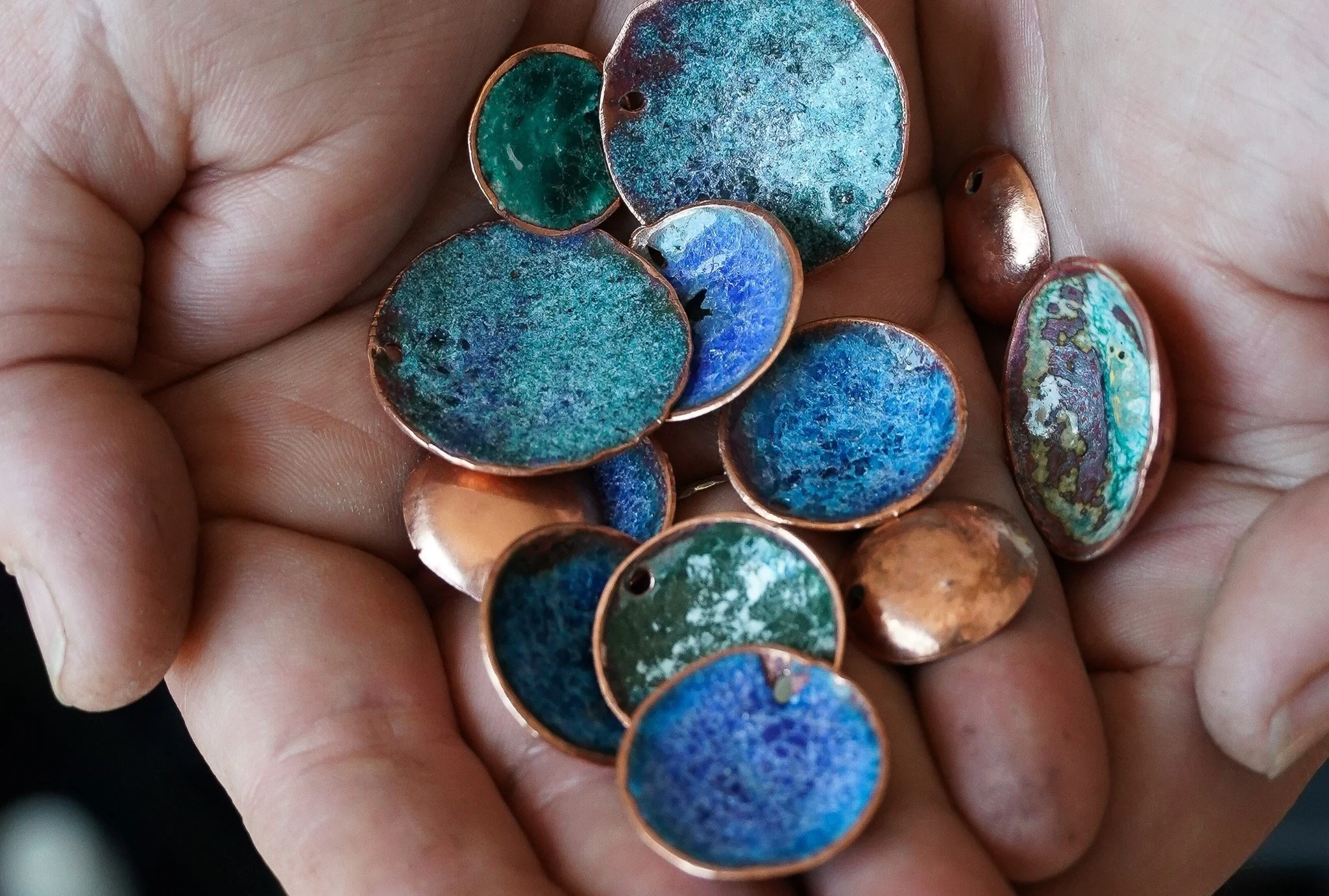
The ring that sent me down an unexpected rabbit hole.
A week ago, someone contacted me and asked if I could make them a ring.
They sent me a photograph and, before agreeing, I did something I often do when I’m shown another piece of jewellery: I checked where the image had come from.
I don't want to copy another maker's work. If I discover that a piece is being made by another jeweller locally, I'd much rather point the customer towards the original maker.
So I saved the photograph and put it through Google Lens.
I wasn't prepared for what I found.
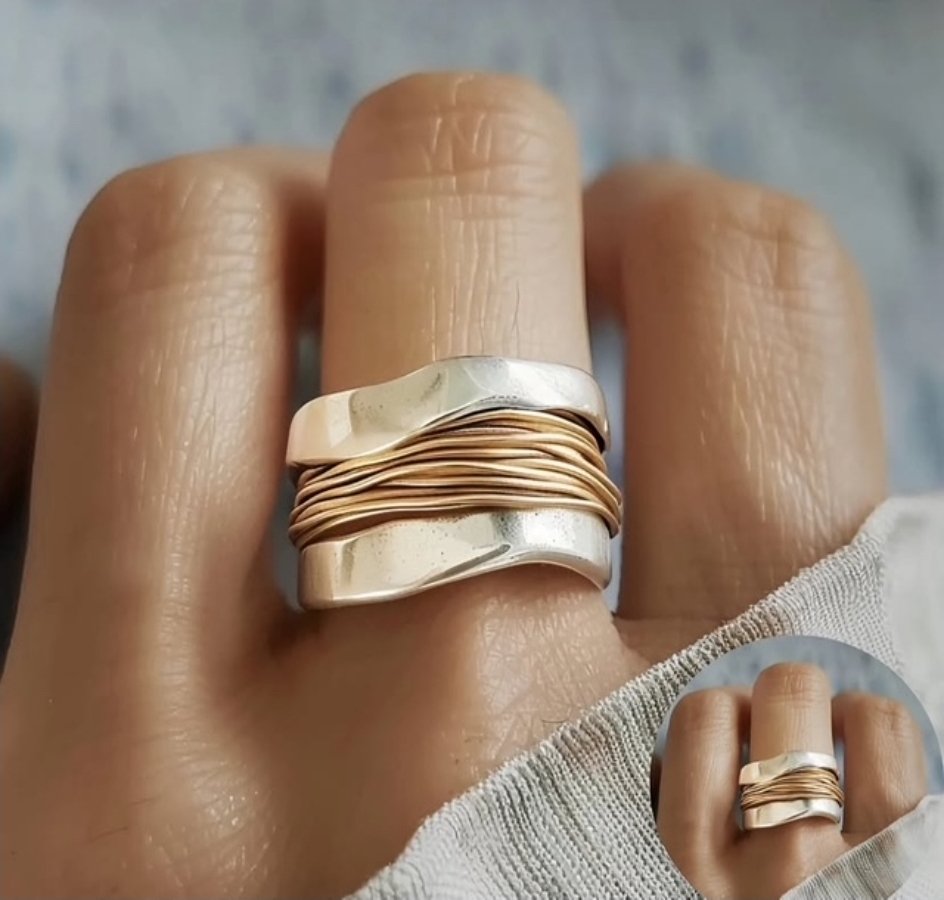
A cropped version of image I was supplied with
Down the rabbit hole
The ring in the photograph was a substantial piece. It appeared to be a very heavy silver ring, wrapped or bound with gold.
Looking at it as a jeweller, I knew immediately that making something similar wouldn't be inexpensive. I would probably carve the form in wax, have it cast in sterling silver and then add the gold.
And yet versions of this ring seemed to be everywhere.
I found extremely inexpensive versions on large online marketplaces. That in itself wasn't particularly surprising. We all know that something costing a few dollars is unlikely to arrive looking exactly like a beautifully styled photograph.
But then I found something much more convincing.
A website was selling the ring for around $75, apparently reduced from $150.
The website told the story of a small mother-and-daughter jewellery business. After many years of making jewellery together, they were supposedly closing their doors.
There were photographs of the two women.
There were photographs of them standing behind a jeweller's bench.
There was a beautiful studio.
There was a touching story.
And, of course, there was a closing-down sale.
It looked like exactly the sort of small creative business many of us genuinely want to support.
Except the deeper I looked, the less real it became.
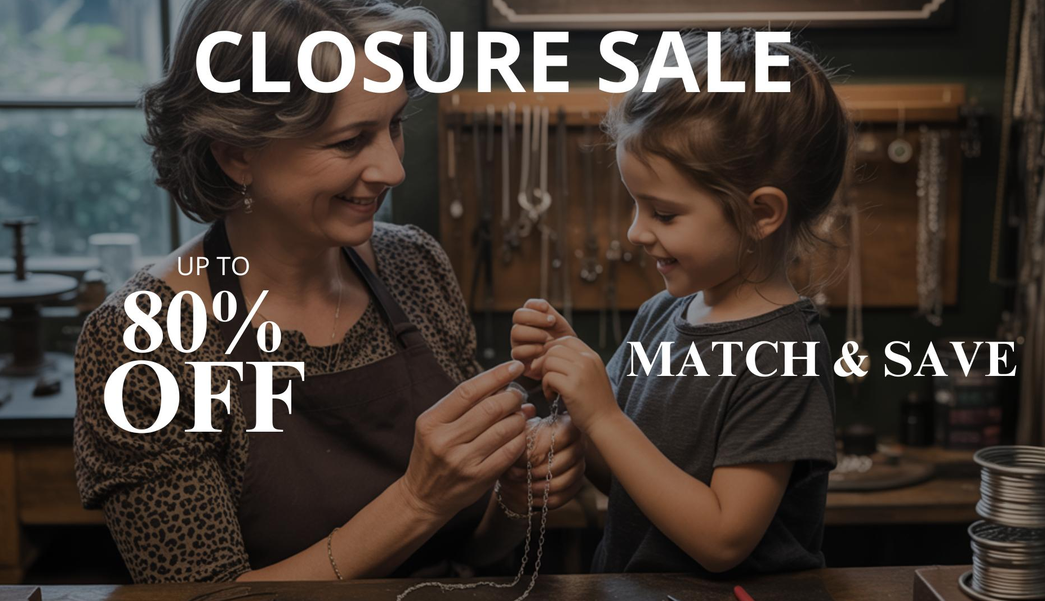
An example of the kind of “family jewellery business closing down” imagery I encountered while researching this story.
This wasn't just one strange website
I started searching for the images and text elsewhere.
Versions appeared across multiple websites. Similar stories appeared again and again. The glowing reviews were suspiciously familiar. Images of supposedly different businesses had the same strangely perfect quality about them.
Even the workshop photographs bothered me.
Jewellery making is messy.
Our benches get scratched. Tools accumulate. Soldering leaves marks. There is dust, half-finished work, odd pieces of metal and objects that we're definitely going to put away properly one day.
The beautifully pristine workshop in these photographs didn't look like somewhere jewellery was actually being made.
Some of the images also appeared to contain the small inconsistencies that can be left behind by AI-generated photography.
And then I discovered that there is actually a name for what I was seeing.
They're called ghost stores.
In 2025, the Australian Competition and Consumer Commission warned consumers about websites presenting themselves as small Australian businesses when they were actually operating overseas and supplying mass-produced goods.
The warning signs identified by the ACCC were remarkably similar to what I had found: emotional stories about local businesses closing down, large discounts, AI-generated photographs of supposed owners or staff, product photographs appearing elsewhere online, limited contact information and overwhelmingly positive reviews on the business's own website.
The ACCC estimated that it had received at least 360 reports relating to around 60 online retailers in the first part of 2025 alone.
Suddenly my little jewellery investigation didn't feel so little.
The part that frightened me
I don't have a problem with someone choosing inexpensive jewellery.
When I was a teenager, I bought cheap jewellery too.
What bothered me was something different.
These websites weren't necessarily saying:
"Here is an inexpensive, mass-produced ring."
They were creating the impression that you were supporting a maker.
A person.
A family.
A small business.
And that matters because there are customers who actively choose handmade precisely because they want that connection.
They want to know who made something.
They value the skill involved.
They want their money to support an independent business rather than simply buying another mass-produced object.
If you've been to one of my classes, you've seen me make jewellery.
If you've met me at a market, you've probably seen my work, my tools and quite possibly me talking far too enthusiastically about how something was made.
But what if you've never met me?
How do you know that I actually make the things I say I make?
That question stayed with me.
Perhaps we need to show the imperfect bits
I use AI.
As a small business owner it can be incredibly useful. It helps me organise ideas, tackle spreadsheets and occasionally work out what on earth I'm going to post on social media when my brain has completely run out of ideas.
But it doesn't design my jewellery.
My creative work comes from what I notice around me, the places I travel, the materials I work with, experiments at my bench and the things that capture my slightly unusual imagination.
So what can genuine makers do when artificial businesses can create such convincing versions of us?
I think my answer is surprisingly simple.
Keep showing the real stuff.
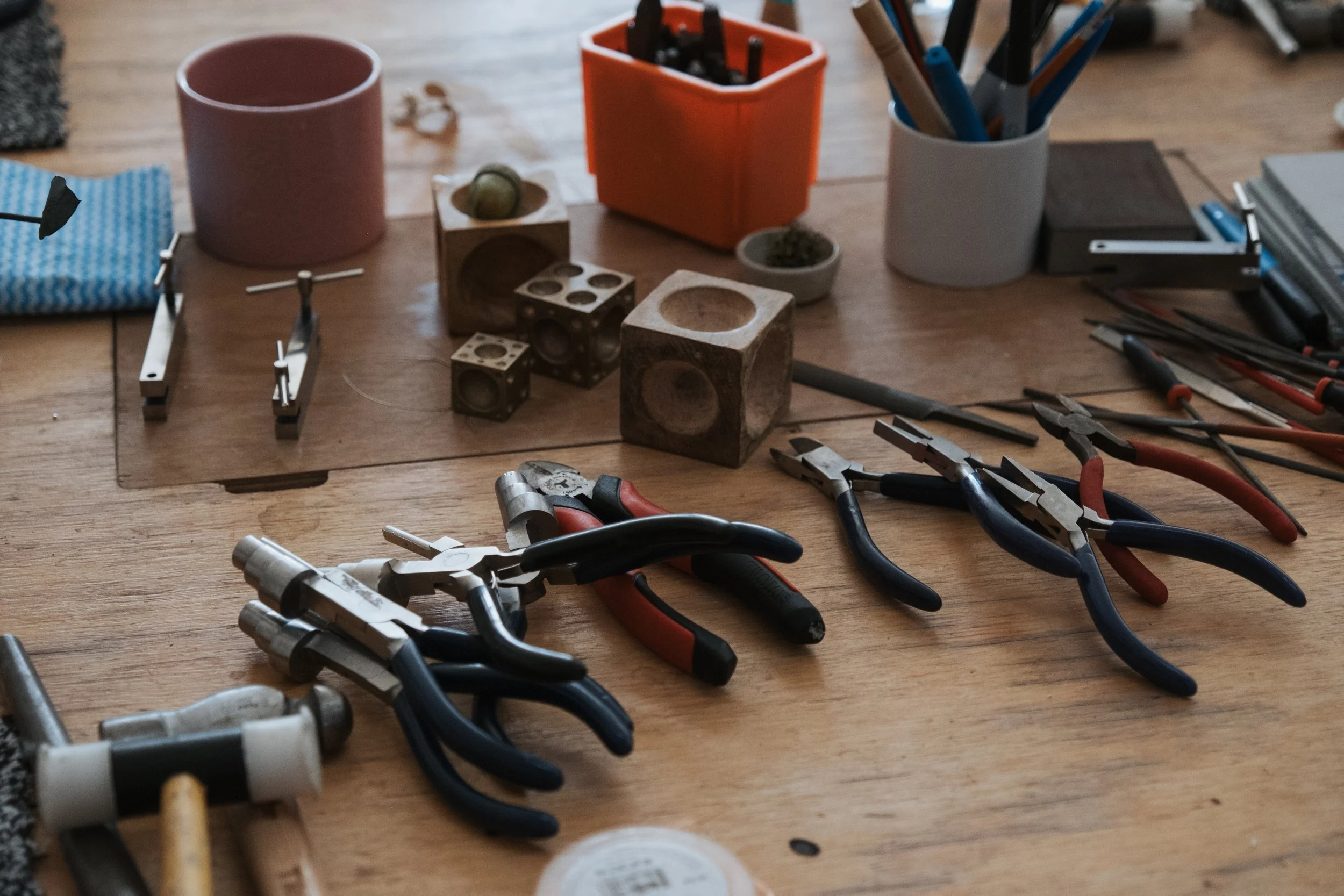
A real jewellery bench is rarely pristine. Mine certainly isn’t.
I'll keep showing my hands making things.
I'll show pieces halfway through.
I'll show my scratched and slightly chaotic bench.
I'll share videos even though being in front of a camera isn't my favourite thing.
I'll show classes, experiments and probably the occasional thing that didn't work.
And I'll continue to sound like me.
Because perhaps the slightly imperfect parts are becoming more important.
AI can create a beautifully styled photograph of a perfect jewellery studio.
It is much harder to manufacture years of accumulated evidence of someone actually practising their craft.
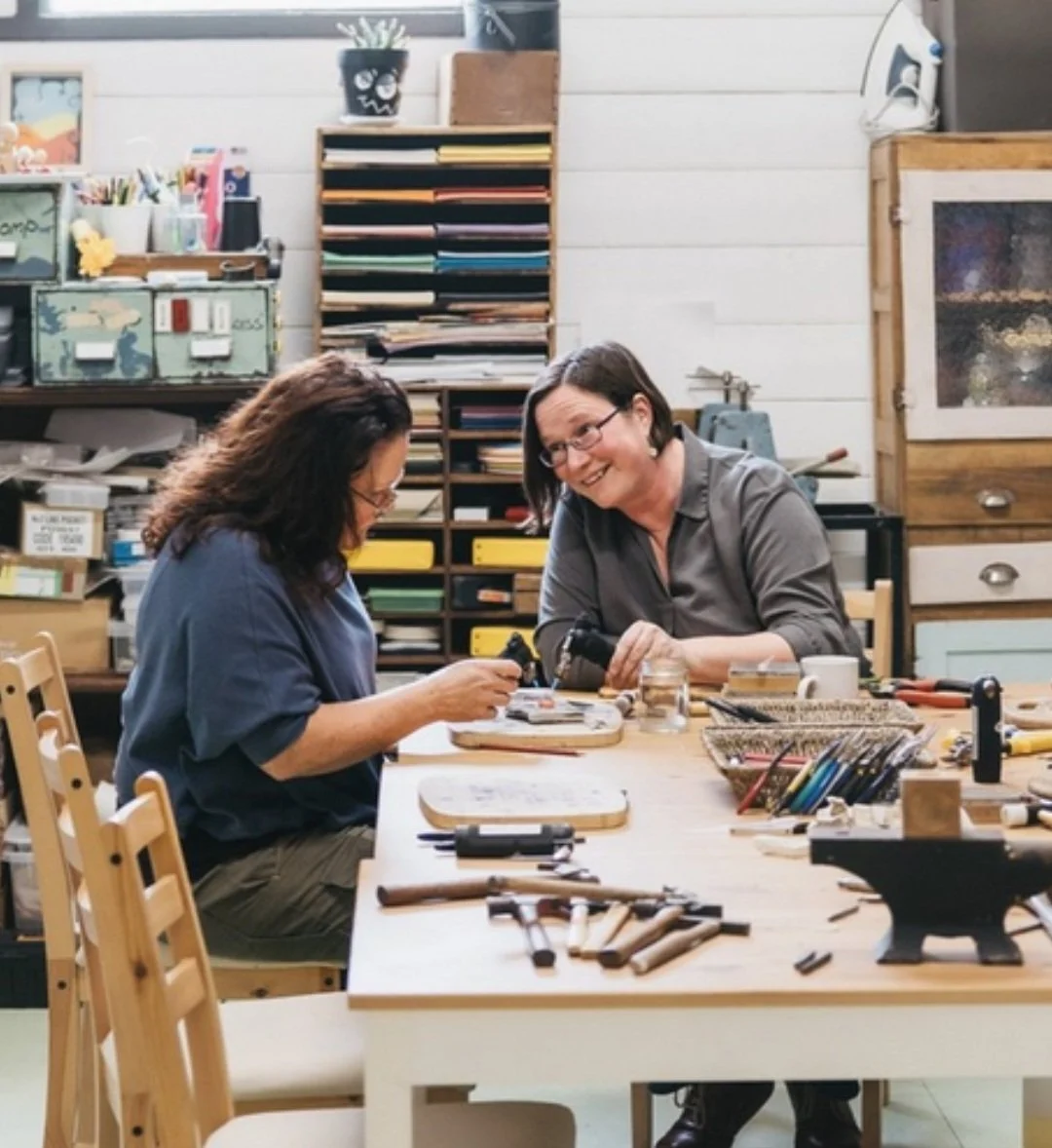
Sarah teaching at The Old Auction House in Kyneton
So how can you tell if something is genuinely handmade?
Look for the maker.
Can you identify who actually makes the work?
Look for the process.
Are there works in progress, tools, videos and studio images?
Check the business.
Look for an ABN and independent business information.
Look beyond their own reviews.
Search independently.
Reverse-search the image.
Try Google Lens.
Where can you find genuine Australian handmade?
A good place to start
If you want to discover genuine Australian-made work, Handmade Canberra is one place I regularly recommend. Its Australian Made Directory connects shoppers with hundreds of Australian makers and producers.
I'll explore where to find genuine handmade — and the questions you're absolutely allowed to ask a maker — in a future post.
And perhaps that's the real point
This experience started with a ring.
But it made me think much more deeply about what handmade actually means in an increasingly artificial online world.
For me, handmade has never simply meant the finished object.
It's the person behind it.
The years of learning.
The mistakes.
The tools.
The slightly battered workbench.
The ideas that arrive at inconvenient moments.
The hands that actually formed the metal.
And the connection between the person who made something and the person who eventually wears it.
AI might become extraordinarily good at creating the appearance of all of those things.
But it still can't be me.
So I'll keep making.
And I'll keep talking about what I discover along the way.
Because I think knowing the difference between looking handmade and being handmade is going to matter more and more.
This is the first in a series where I'll share some of the things I've learnt as a maker that may help you shop for genuine handmade work with a little more confidence.
Sarah x